The DASH Diet for Blood Pressure: Sodium, Potassium, and Vascular Health
Learn the clinical DASH eating plan. How optimizing the sodium-to-potassium ratio lowers systolic blood pressure as effectively as first-line medications.
Expert reviewed by Shivam Gupta, CSCS, CPT on Reviewed for accuracy by the professional named here. How we label reviews
In This Article
Hypertension (high blood pressure) is often dubbed the “silent killer” because it inflicts continuous, invisible mechanical trauma on arterial walls, kidneys, retinas, and the brain without causing a single overt physical symptom. Nearly half of all adults in the United States have hypertension.
When patients are diagnosed, the conversation frequently revolves around taking pharmaceutical ACE inhibitors, ARBs, or beta-blockers. Yet in landmark multicenter randomized clinical trials sponsored by the National Institutes of Health (NIH), the DASH (Dietary Approaches to Stop Hypertension) Diet demonstrated an extraordinary capacity: reducing systolic blood pressure by 8 to 11 mmHg within just two to four weeks—an effect size equivalent to or exceeding first-line prescription antihypertensive medications.
The Secret: It’s Not Just About Restricting Salt
For decades, public health messaging focused almost obsessively on a single instruction: “Cut your salt intake.”
While reducing sodium is helpful (particularly in “salt-sensitive” individuals), the DASH trial proved that the sodium-to-potassium ratio is far more critical than sodium restriction alone:
- Sodium causes fluid retention in the intravascular space, increasing blood volume and raising pressure against arterial walls.
- Potassium performs the exact opposite role: it acts inside vascular smooth muscle cells to trigger vasodilation (widening arteries) while signaling the kidneys to excrete excess sodium into urine.
- Our evolutionary ancestors consumed roughly 4 times more potassium than sodium. Modern diets reversed this ratio completely, delivering 3 times more sodium than potassium due to ultra-processed packaged foods.
The Core Pillars of the DASH Dietary Framework
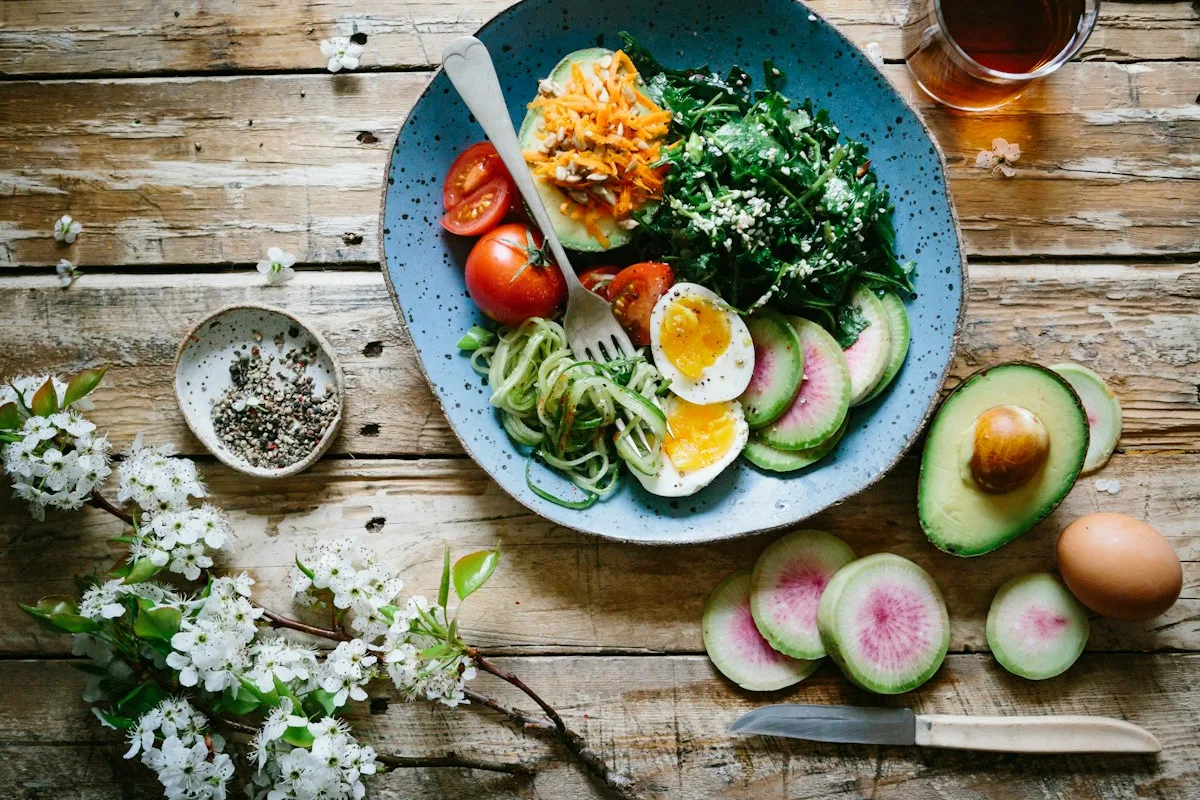
The DASH eating plan is not a restrictive crash diet; it is a whole-food, plant-forward nutritional pattern rich in potassium, magnesium, calcium, and dietary fiber:
- Vegetables & Fruits (4 to 5 servings of each daily): The primary engine of potassium and magnesium. A serving is 1 cup of raw leafy greens, 1/2 cup of cooked vegetables, or 1 medium fruit.
- Whole Grains (6 to 8 servings daily): Rolled oats, brown rice, whole wheat, and farro (providing magnesium and soluble beta-glucan).
- Low-Fat or Fermented Dairy (2 to 3 servings daily): Plain Greek yogurt, kefir, and skim milk deliver bioavailable calcium, which regulates vascular smooth muscle contractility.
- Lean Meats, Poultry & Fish (6 or fewer servings daily): Favoring wild salmon and skinless poultry while slashing red processed meats (sausages, bacon).
- Nuts, Seeds & Legumes (4 to 5 servings per week): Almonds, walnuts, lentils, and kidney beans packed with arginine (the substrate for endothelial nitric oxide).
| Food Group | Daily Target Servings | Example Serving Size | Primary Blood Pressure Nutrient |
|---|---|---|---|
| Vegetables | 4 to 5 servings | 1 cup raw spinach or 1/2 cup cooked broccoli | Potassium, Magnesium, Dietary Nitrates |
| Fruits | 4 to 5 servings | 1 medium apple, 1/2 cup berries, 1 orange | Potassium, Flavonoids, Pectin Fiber |
| Whole Grains | 6 to 8 servings | 1 slice 100% whole grain bread or 1/2 cup oats | Magnesium, Soluble Fiber |
| Dairy (Low-Fat/Fermented) | 2 to 3 servings | 1 cup milk or 1 cup plain Greek yogurt | Bioavailable Calcium, Bioactive Peptides |
| Nuts, Seeds & Beans | 4 to 5 servings / week | 1/3 cup nuts or 1/2 cup cooked black beans | L-Arginine, Magnesium, Unsaturated Fats |
Top High-Potassium Superstars to Add Today
- Cooked Spinach: 840 mg potassium per cup.
- Baked Sweet Potato (with skin): 950 mg potassium per large potato.
- Avocado: 700 mg potassium per medium fruit.
- White Beans: 1,000 mg potassium per cup.
- Plain Greek Yogurt: 380 mg potassium per cup.
The Bottom Line
High blood pressure is not an inevitable consequence of aging. By embracing the DASH diet framework and flooding your vascular system with whole-food potassium, magnesium, and fiber, you protect your arteries, heart, and brain naturally.
Sources
HealthScope uses government health agencies, medical institutions, and peer-reviewed research to support the facts in our articles. Read our sources policy.
- New England Journal of Medicine. A Clinical Trial of the Effects of Dietary Patterns on Blood Pressure (DASH Trial) (opens in a new tab). 1997.
- Advances in Nutrition. The Sodium-to-Potassium Ratio and Cardiovascular Disease Risk (opens in a new tab). 2014.